

Engineering & applied prototypes · Embedded systems
Course prototype
- Context
- Coursework
- Maturity
- Documented course study
- Evidence
- Documented
- Source
- Private source
- Ownership & provenance
- Joint historical submission
Smart bin — fill sensing and state alerts
An ESP32 course prototype that estimates bin fill from distance, presents the state on a display, indicators and buzzer, and sends state changes to a nearby phone over BLE.
Problem and audience
A bin's exterior does not reveal when collection is needed. This prototype shows embedded-systems learners how a measured distance can become a readable local state and a nearby phone event, without presenting the work as a deployed waste-management service.
User flow
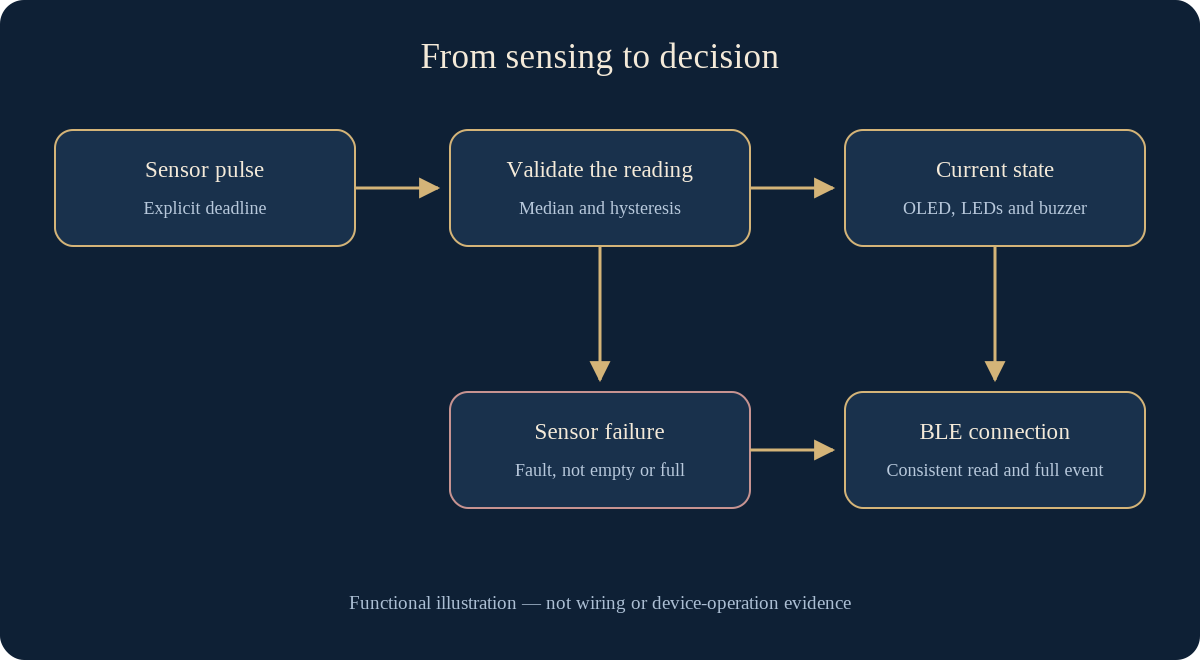
When waste is added, an ultrasonic sensor measures the gap between the lid and the surface. The ESP32 validates the reading, passes usable samples through a short filter, then assigns a fill state using configurable bands and hysteresis around each transition. The OLED and indicators show the distance and state, the buzzer marks the full state, and a connected client can read the state and receive a Bluetooth Low Energy event.
What the system does
The prototype combines an ESP32, distance sensor, OLED, five indicators including a power indicator, a buzzer and a breadboard circuit. Software separates measurement validity from the state decision and uses a deadline, filtering and hysteresis so an old or failed value does not become a new alert. Connection and re-advertising are managed independently of fill sensing, and the full event is not emitted on every loop.
Yahya's role
Yahya organised measurement validation, state and alert logic, and prepared the explanation, diagrams and logic tests for the documented prototype.
Evidence and maturity
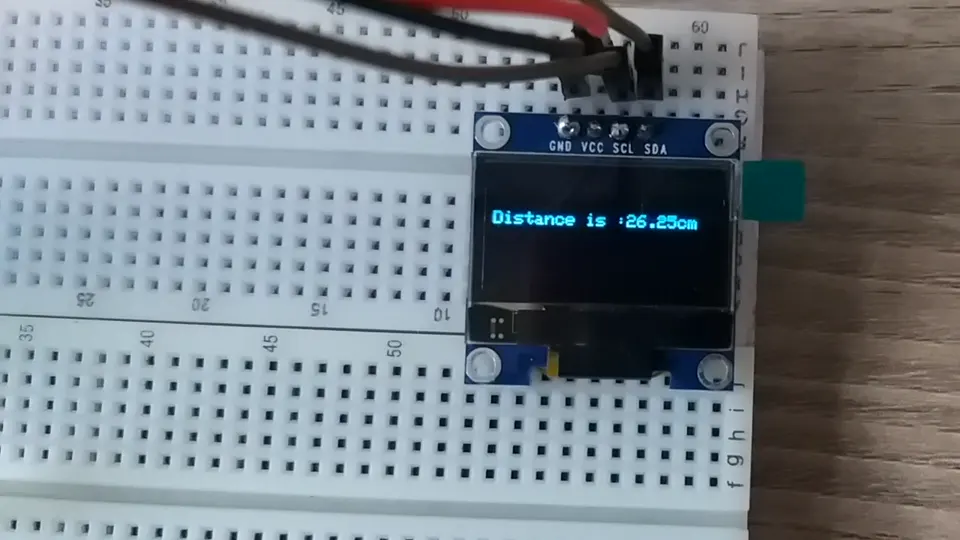
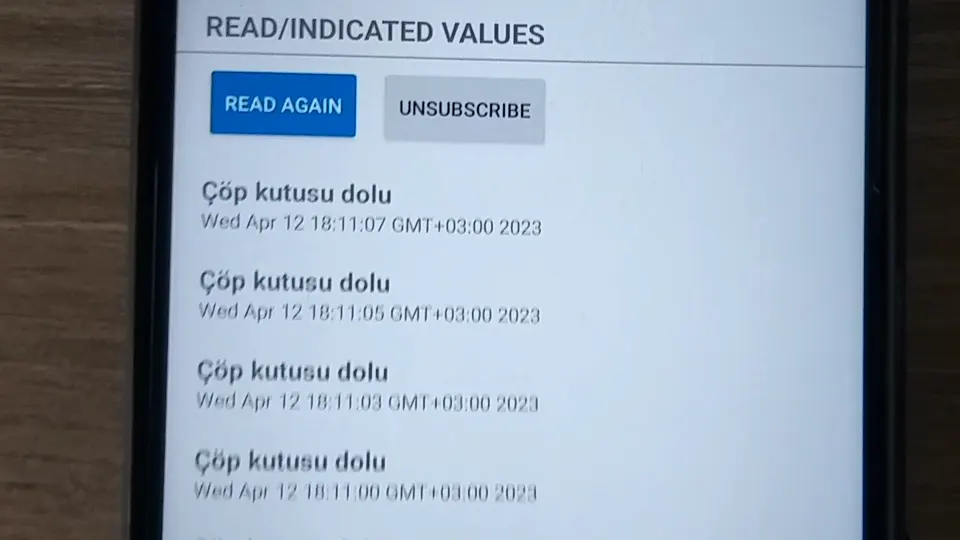
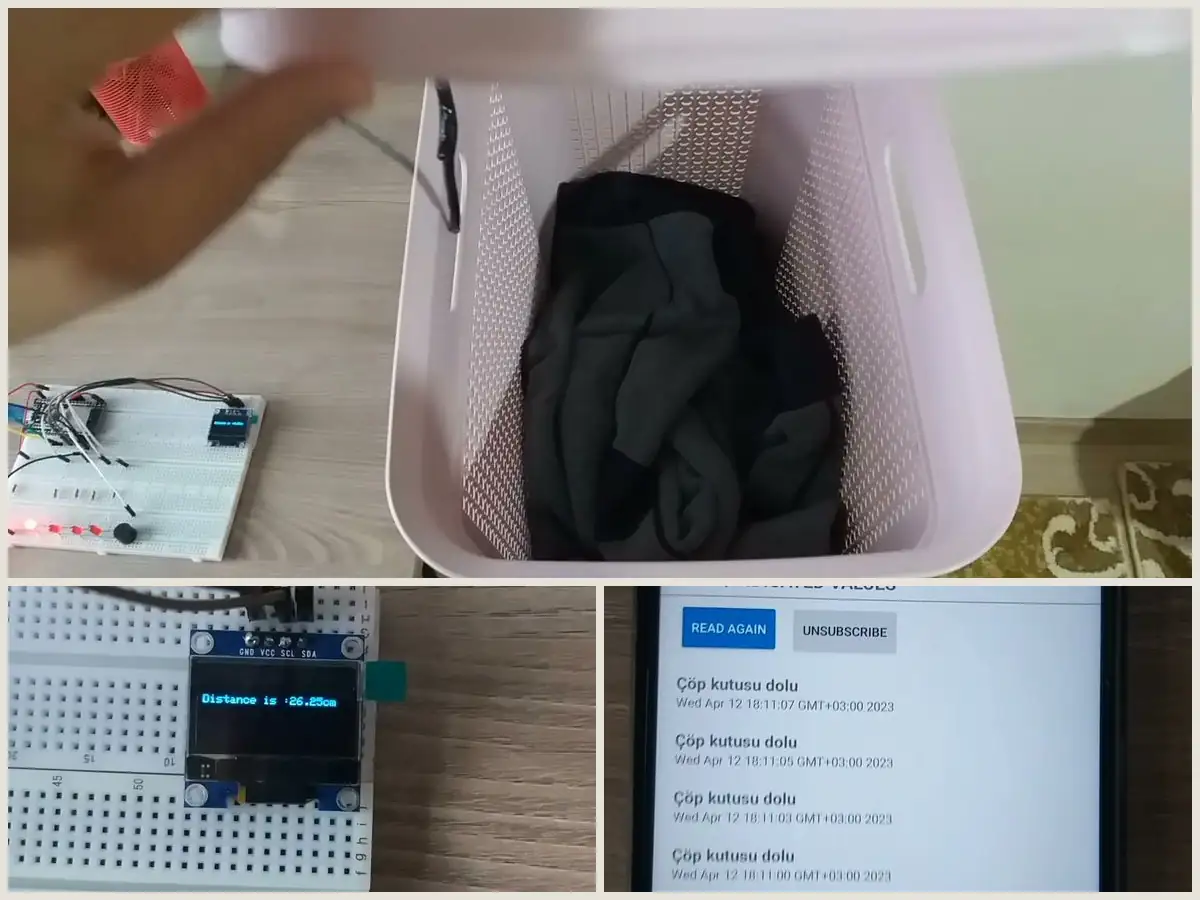
The course video shows the bin, breadboard circuit, OLED reading and phone alert. Forty-four logic cases and a generic ESP32 build also passed. This establishes a documented course prototype and tested software logic, not distance calibration or reliable street operation.
Limits
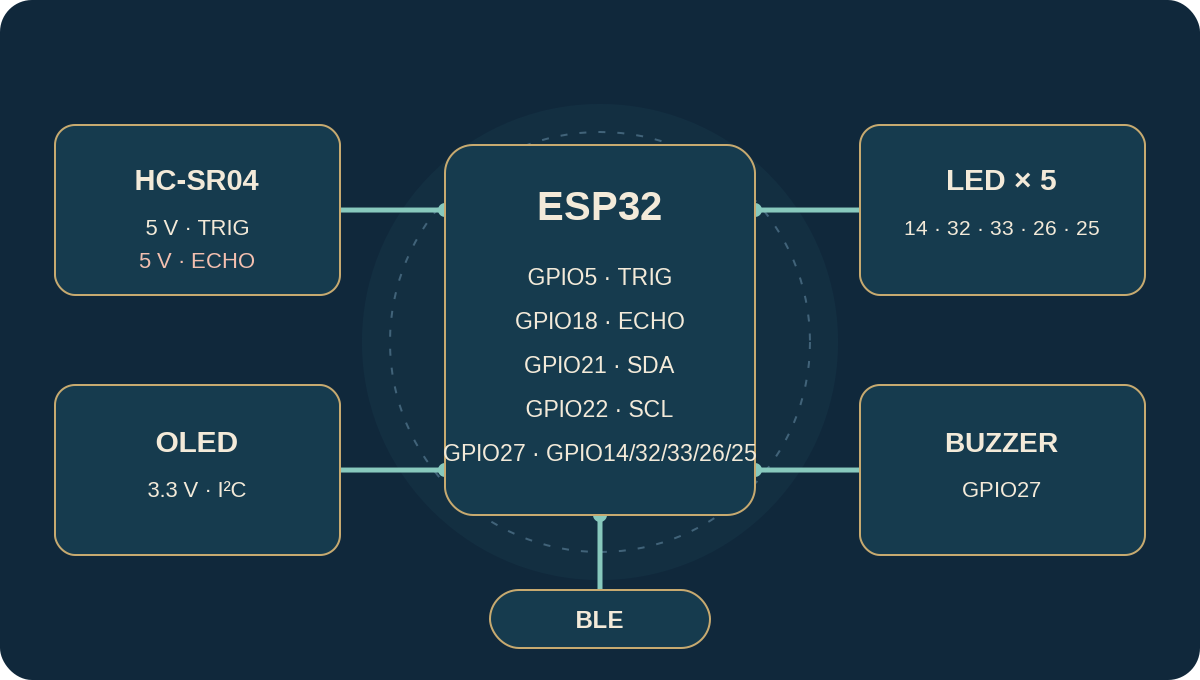
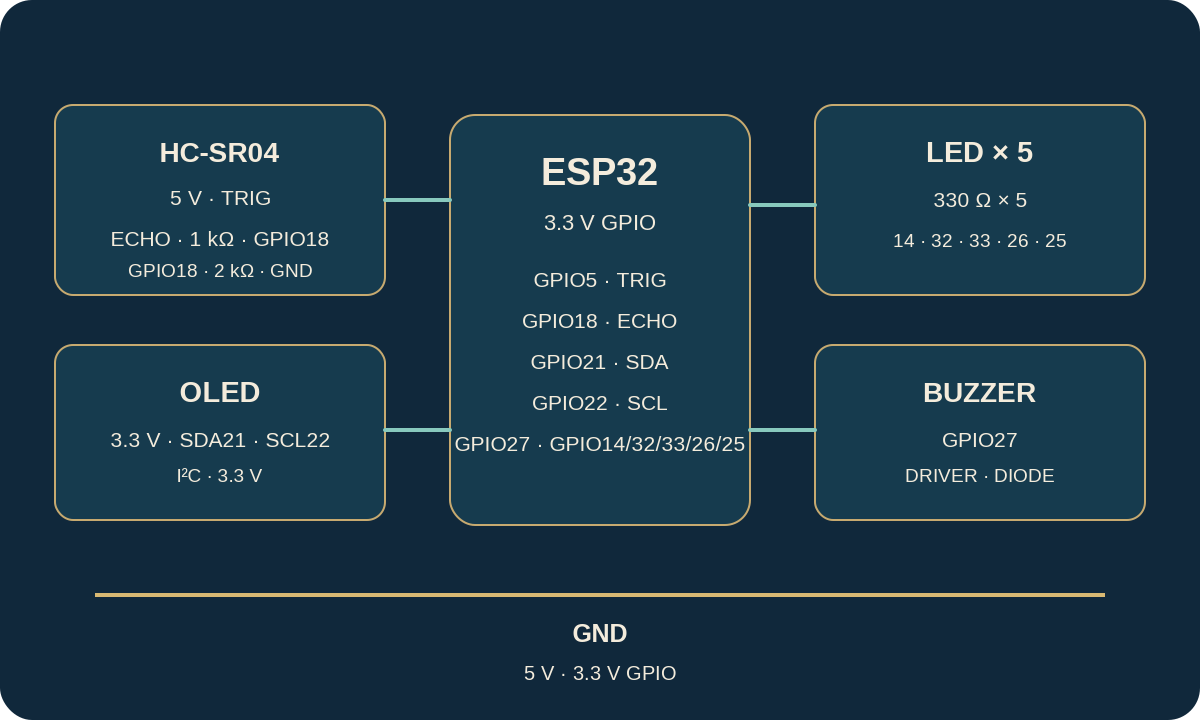
Distance bands are provisional settings that require calibration with the actual bin and sensor. A board-compatible Echo input requires level shifting and verification of the display, buzzer, resistors and common ground before assembly. The hardware, energy use, response time and field operation were not retested.
Signal map and wiring reference
From the original prototype demonstration
These cropped course-video frames document a bounded prototype demonstration, not hardware calibration or field operation.
YouTube opens in a new tab only when selected; no video player loads with this page.
Available evidence
Course video and circuit, display and phone captures; 44 logic cases and a successful generic ESP32 build. Sensor calibration and renewed hardware operation were not established.
Sensing and state flow